

Weekly Reflection TemplateAug 19, 2026
Weekly Review Template: Run Your Review in 15 Minutes
A weekly review template you can run in 15 minutes every Sunday. Six prompts, a scoring table, and a faster way to capture it by voice.
 Junaid Khalid
Explore Web Whisper, the voice-to-text software that adapts to your professional needs. Discover how it enhances productivity today!

Web Whisper is an innovative voice-to-text software designed specifically to meet the diverse communication needs of professionals by offering context-aware dictation modes. This tool goes beyond basic transcription, adapting your spoken words to the appropriate tone, structure, and formatting required for different professional contexts, thereby solving the common problem of cognitive load and extensive editing associated with traditional dictation tools.
Web Whisper is a voice-to-text application that provides context-aware dictation modes for professionals. Unlike generic speech recognition software, it automatically adjusts tone, structure, and formatting based on the communication channel (e.g., email, messaging, notes). This unique approach significantly reduces editing time and cognitive effort, making it ideal for professionals who communicate across multiple platforms daily. Its core strength lies in ensuring appropriateness and clarity in written output, making it a valuable asset for busy individuals seeking efficiency and professional polish.
Voice-to-text technology, also known as speech recognition software, is a field of computer science that enables the identification and translation of spoken language into written text. This technology has evolved significantly from rudimentary dictation systems to sophisticated applications capable of understanding complex linguistic nuances. The core principle involves converting audio signals into a digital format, processing them through acoustic and language models, and then outputting transcribed text.

The applications of voice-to-text technology are vast and continue to expand. For professionals, it offers a powerful means to enhance productivity by enabling hands-free text input, speeding up document creation, and facilitating communication. Modern voice recognition systems leverage advanced artificial intelligence and machine learning algorithms to improve accuracy and adapt to individual speech patterns. For a deeper dive into the fundamentals, explore our guide on what is speech to text. The underlying technology, such as OpenAI's Whisper model, which has seen over 4.1 million monthly downloads as of December 2025, showcases the widespread adoption and development in this area, having been trained on 680,000 hours of multilingual and multitask supervised data collected from the web.
While general-purpose voice-to-text software has improved dramatically, traditional dictation tools often fall short in professional environments. The primary issue stems from their one-size-fits-all approach to transcription. When a professional dictates, they naturally adjust their speaking style, tone, and vocabulary based on whether they are composing an email, a quick chat message, or personal notes. However, most speech recognition software simply transcribes words as spoken, without considering the intended context.
This disconnect creates a significant problem: friction, extra editing, and cognitive load. Users are forced to mentally switch gears, not just in their speech but also in anticipating the extensive post-dictation editing required. A study by Penn State highlighted this issue, finding that users spent 66% of their time on correction activities and only 33% on dictation when using speech recognition software. This means that two-thirds of the effort goes into fixing what the software got wrong or, more commonly, what it transcribed correctly but inappropriately for the desired output.
For professionals who juggle multiple communication platforms daily - from formal emails to casual Slack messages and structured LinkedIn posts - this inefficiency is a major time sink. They need a tool that understands not just what they are saying, but how it should be presented in a specific context. The lack of contextual awareness in traditional tools leads to generic outputs that require manual rephrasing, reformatting, and tone adjustments, ultimately negating much of the efficiency gains dictation promises.
Web Whisper emerges as a sophisticated solution specifically designed to address the unique communication challenges faced by professionals. It is not just another voice-to-text software; it is a context-aware desktop application that understands that professional communication is rarely uniform. The core purpose of Web Whisper is to eliminate the friction and cognitive load associated with adapting dictated speech for various professional contexts. Instead of a single, generic transcription, Web Whisper provides intelligent, contextually appropriate text output.
This tool is built for the professional who values precision, efficiency, and appropriate communication across all platforms. Whether you're a founder, consultant, knowledge worker, or executive, Web Whisper aims to transform your voice into polished, ready-to-send text, ensuring your message is always on point. Its differentiation lies in its focus on appropriateness and clarity, rather than merely speed or raw transcription accuracy, ensuring your voice becomes the right kind of text for each context.
Web Whisper operates on an advanced engine that integrates sophisticated speech recognition with context-aware processing. When a user speaks, the core speech recognition software transcribes the audio into raw text. However, this is where Web Whisper diverges from traditional tools. Instead of immediately presenting this raw transcription, it routes the text through a chosen "Mode." Each Mode is a processing profile equipped with a distinct set of rules, linguistic models, and formatting guidelines tailored to a specific communication context.
For instance, if "Email Mode" is active, Web Whisper's engine applies filters that prioritize a professional, neutral tone, proper sentence structure, and conventional email formatting. It might automatically expand contractions, correct informal phrasing, or suggest more formal vocabulary. This intelligent layer analyzes the transcribed text and transforms it to align with the selected context, effectively acting as a digital communication assistant. The underlying technology benefits from advancements in AI, similar to how large language models are trained, ensuring high accuracy and contextual understanding. The goal is to provide a clean transcription that preserves meaning while adapting it to the chosen output format, significantly reducing the need for manual editing.
Web Whisper's distinct advantage lies in its "Modes," which are context-aware processing profiles that automatically adapt your speech to the right output format. These modes are designed to cater to the diverse communication needs of professionals, ensuring that your dictated text is always appropriate and polished, regardless of the platform.
Here are the modes Web Whisper offers:
These modes are what make Web Whisper a truly unique voice-to-text software, differentiating it from generic solutions by providing tailored output for every professional need.
When evaluating voice-to-text software, professionals often consider accuracy, speed, and ease of use. While many tools excel in basic transcription, Web Whisper's distinct advantage lies in its context-aware processing. Let's compare it with some popular alternatives.

Google Docs Voice Typing is a widely accessible tool, often used for quick dictation within the Google ecosystem. It offers decent accuracy for general purposes and is integrated directly into the document editing process. However, Google Docs voice typing primarily provides raw transcription. For professionals, this means significant manual editing to adjust tone, format, and structure for different outputs like emails, messages, or reports. It lacks the contextual intelligence to automatically convert spoken notes into bullet points or formalize casual speech for an email.
Similarly, Windows Speech Recognition offers built-in dictation capabilities for Windows users. It allows for system-wide voice control and text input. While it can be customized over time to improve accuracy for individual users, like Google Docs, it does not offer context-specific output modes. A professional using windows speech recognition would still need to manually rephrase and reformat dictated text to suit an email versus a Slack message. The cognitive burden of constant self-correction and adaptation remains high.
Many other stand-alone voice to text software solutions focus on raw speed or advanced AI models for transcription accuracy. While impressive, these often miss the critical step of contextual adaptation. They might transcribe your words perfectly, but if those words are spoken casually for a quick thought, they won't automatically transform into a professional email ready for a client.
Here's a comparison table highlighting the key differences:
| Feature | Web Whisper | Google Docs Voice Typing | Windows Speech Recognition |
|---|---|---|---|
| Core Functionality | Context-aware dictation modes | Basic transcription | System-wide dictation & control |
| Output Adaptation | Automatic tone/format adjustment | Manual adjustment required | Manual adjustment required |
| Cognitive Load | Low - minimal post-editing | High - extensive post-editing | High - extensive post-editing |
| Target User | Professionals (40+), knowledge workers | General users, students | General Windows users |
| Key Differentiator | Appropriateness & clarity per context | Ease of access within Google Docs | Integrated OS functionality |
| Use Case Suitability | Emails, messages, notes, LinkedIn | Drafts, personal documents | Basic text input, system navigation |
The fundamental difference is that Web Whisper understands that speech is fluid and adapts to context before presenting the final text, whereas other tools require the user to perform this crucial contextual adaptation themselves. This makes Web Whisper uniquely suited for professionals who need efficiency without sacrificing the professional polish of their communications.
Web Whisper is specifically tailored for a demographic that demands both efficiency and precision in their communication. Its design addresses the pain points of professionals who frequently switch between different communication contexts throughout their workday.
The primary beneficiaries include:
The target demographic often includes individuals aged 40+, who appreciate simplicity, predictability, and trust in their tools. They are often wary of overly complex solutions or AI hype, preferring practical applications that deliver tangible benefits. Web Whisper offers a reliable solution that reduces friction and cognitive load, allowing them to focus on the message rather than the mechanics of its delivery. The growing adoption of AI technologies in government sectors, with 52% of CIOs outside the U.S. expecting increased IT budgets for AI in 2026, underscores the broader trend of professionals seeking advanced, intelligent tools to enhance productivity and communication.
For professionals navigating a complex communication landscape, Web Whisper offers a compelling solution to a pervasive problem: the need for contextually appropriate written output from dictated speech. Traditional voice-to-text software, while offering transcription, often leaves users with the arduous task of manually editing and rephrasing to match the tone and format required for different platforms - be it a formal email, a concise chat message, or structured notes. This creates significant friction and cognitive load, undermining the very efficiency dictation aims to provide.
Web Whisper distinguishes itself by addressing this core challenge head-on with its innovative Modes. These context-aware processing profiles ensure that your voice becomes the right kind of text for each specific context, whether you're drafting a professional email, a casual Slack message, or organized bullet-point notes. By automating the adaptation of tone, structure, and formatting, Web Whisper minimizes post-dictation editing and frees up valuable mental energy.
If you are a professional who frequently communicates across multiple platforms, values efficiency without sacrificing professionalism, and seeks a tool that understands the nuances of different communication contexts, then Web Whisper is designed for you. It offers a unique blend of advanced speech recognition and intelligent contextual adaptation, making your communication clearer, more appropriate, and significantly more efficient. Speak once, write appropriately everywhere - that's the promise of Web Whisper. We encourage you to explore how Web Whisper can transform your professional communication needs and enhance your daily productivity.
Web Whisper differentiates itself through its unique "Modes" feature. Unlike traditional voice-to-text software that provides a generic transcription, Web Whisper's modes automatically adapt your dictated speech to the specific context, tone, and formatting required for different communication types, such as emails, messaging apps, or notes. This significantly reduces the need for manual editing and ensures professional-grade output.
Web Whisper offers several context-aware modes to suit various professional communication needs:
Web Whisper is particularly beneficial for professionals aged 40+ including founders, consultants, knowledge workers, and executives, who are heavy email and messaging users. Anyone who frequently communicates across multiple platforms and values efficiency, predictability, and professional output without the hassle of extensive editing will find Web Whisper highly advantageous.
Web Whisper utilizes advanced speech recognition technology, similar to models trained on extensive datasets like OpenAI's Whisper, which has been downloaded over 4.1 million times monthly as of December 2025. This ensures a high degree of accuracy in transcribing spoken words. The added layer of context-aware processing further refines the output, ensuring not just accuracy but also appropriateness for the intended communication.
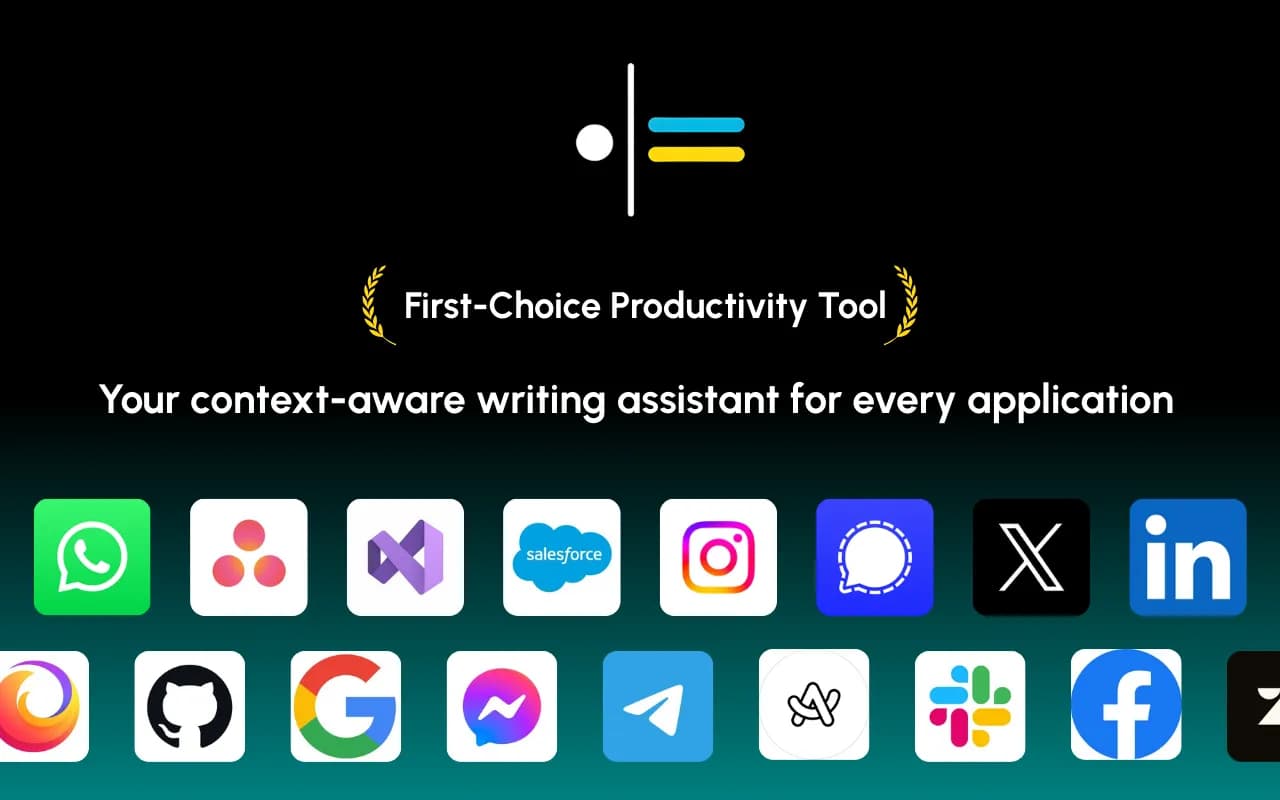
As a desktop application, Web Whisper is designed to seamlessly integrate into a professional's workflow, allowing dictated text to be input into various applications. While specific integration details may vary, its core function is to provide polished, context-appropriate text that can be easily transferred to email clients, messaging platforms, document editors, and other professional software.

Junaid Khalid
Founder & CEO
Founder and solopreneur writing about how modern businesses run leaner and faster with AI. I build software that turns everyday work, from capturing thoughts to writing and staying organized, into something effortless, and I share what I learn along the way.
A weekly review template you can run in 15 minutes every Sunday. Six prompts, a scoring table, and a faster way to capture it by voice.
Junaid KhalidA vet visit notes template that captures the diagnosis, dosing, and follow-up before you leave the exam room. Speak it into your notes instead of typing.
Junaid KhalidCounseling progress notes software that writes your notes by voice and keeps client data on your own machine, so counselors finish notes the same day.
Junaid Khalid