

Weekly Reflection TemplateAug 19, 2026
Weekly Review Template: Run Your Review in 15 Minutes
A weekly review template you can run in 15 minutes every Sunday. Six prompts, a scoring table, and a faster way to capture it by voice.
 Junaid Khalid
A blood pressure log app only helps if your doctor can read it. How to log BP by voice, add context, and hand over notes that make the visit faster.
Most blood pressure logs die in the first week. You buy the cuff, write two readings on a sticky note, and by day four the note is gone. Then the annual physical arrives and you reconstruct three months of numbers from memory, which is to say you invent them.
The problem is not discipline. It is friction. Typing a systolic and diastolic pair, plus the time, plus whether you had coffee, into a phone app with six taps per entry is enough steps that people quit. A blood pressure log app your doctor can actually use has to be fast enough that you keep doing it and hold the context a clinician needs to read the trend.
That is a note-taking problem more than a medical one. Below is how to build a BP log that survives past week one, and where dictation removes the steps that make people quit.
A single reading tells a clinician almost nothing. Blood pressure moves through the day, spikes with stress and caffeine, and reads differently at the clinic than at home. That gap, the white-coat effect, is why home logs exist.
What makes a log useful is not more numbers. It is context attached to each number:
Those four things across two weeks let a doctor see a pattern. Twenty naked numbers just make them re-measure in the office. Your BP log app matters less than the habit and the context: the best app is whichever one you will still be using in three weeks.
Dedicated hypertension log apps front-load a lot of taps. Open the app, tap add, tap the systolic field, type, tap diastolic, type, set the time, pick a tag, save. Twice a day, the tax adds up. It is tedious enough that the streak breaks, and once the streak breaks the log is worthless for a trend.
The workarounds are worse. A paper diary gets lost. A photo of the cuff captures the number but none of the context and cannot be searched. A spreadsheet is honest but slow to fill on a phone.
There is also a privacy angle a lot of health apps skip. Your blood pressure history is medical information, and many trackers sync it to a company server by default. If you would rather your numbers stay on your own machine, that has to be a setting you control, not a line in a policy page.
None of this means you need a fancier app. It usually means a faster way to get a full, contextual entry into whatever log you already trust.
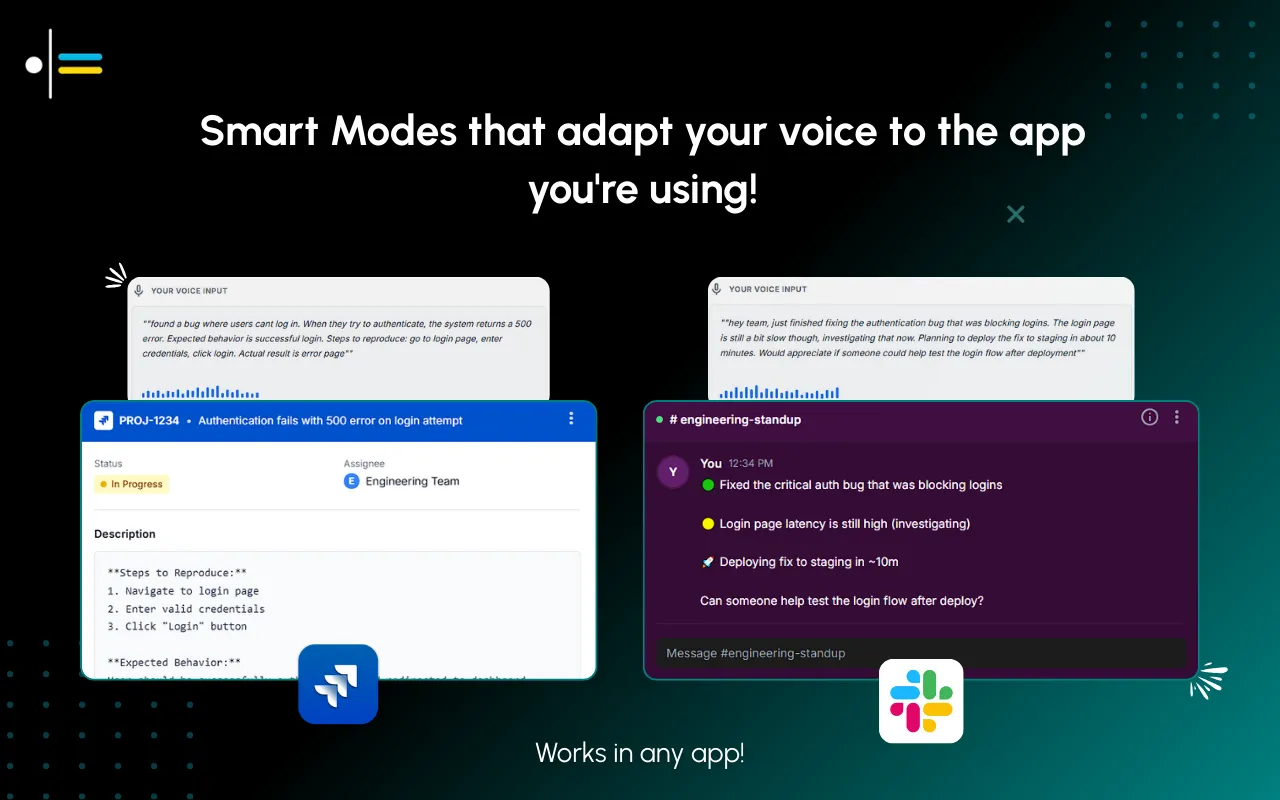
Contextli is a desktop dictation app. It does not store your health data or try to be a medical device. It listens when you speak and types clean text into whatever window is focused: a notes file, a Google Sheet, a shared doc, or an email to your care team. It is system-level, so it works in the app you already use.
The point is speed with context. Instead of six taps, you speak one sentence:
"October 14, morning reading before meds, 128 over 82, pulse 70, felt calm, left arm."
Contextli types that into your log as a clean line, numbers and context together, in about the time it takes to read a cuff.
Two features matter here. Notes Mode keeps your dictation as plain, structured text instead of rewriting it into prose, which is what a running log wants. And you can customize a Mode by feeding it three or four examples of how you want a reading formatted, so every entry comes out in the same shape. Show it "date, time, reading, context" once and it holds. That example-based setup is covered in the customize Contextli modes guide.
On privacy, Contextli gives you a real switch, not a slogan. Turn off cloud sync and it stores nothing in its database: your notes stay as local files on your own machine. Go further and run the models locally, so transcription happens on your own laptop with the internet off, on a modern Mac or Windows machine. Health data is a good reason to use those settings, and the dictation privacy guide walks through the full ladder.
The gap is small per reading and large over a two-week habit, because a ten-second task gets done and a forty-second one gets skipped.
| Task | Typing into a BP tracker app | Speaking with Contextli |
|---|---|---|
| Start an entry | ~3 taps | Focus window, start dictation |
| Enter systolic and diastolic | 2 fields, typing | Spoken in the sentence |
| Set the time | 1 tap or manual | Spoken in the sentence |
| Add context (after coffee, before meds) | Often skipped, extra taps | Spoken in the same breath |
| Approx. time per full entry | ~40 seconds | ~10 seconds |
Numbers here illustrate the step count, not a benchmark study. The real difference is that the voice version keeps the context: saying "right after lunch, felt tense" costs nothing extra, while typing it is the step people drop first.
Speed is worth naming honestly. If all you want is to dump raw numbers with no context, a tool built purely for speed like Wispr Flow will feel quick. Where Contextli differs is that it keeps your reading in a consistent, doctor-readable format and keeps the data on your machine when you ask it to, which for a health log is the part that matters.
A clean two-week log before a visit is more useful to a clinician than a scattered three-month one. Consistency is the signal.
Pick two fixed times, morning before medication and evening. Sit for five minutes first, feet flat, arm supported. Take the reading, then speak it into your log in the same format each time. That is the whole routine.
In practice: it is 7:10 in the morning. A 54-year-old consultant who started home monitoring after a borderline clinic reading takes his cuff off, opens the notes file on his laptop, and speaks, "Tuesday, 7am, before meds, 131 over 84, pulse 68, slept poorly." Using Notes Mode, Contextli types that as a clean line in his running log. Typing the same entry into a tracker app takes him around 40 seconds and he usually skips the "slept poorly" part; spoken, it takes about 10 seconds and the context stays. Two weeks later he emails the file to his doctor's office, and the visit starts with a trend on the screen instead of a fresh measurement.
The outcome is not a smarter app. It is a log that stays complete because entering a reading stopped being a chore.
Blood pressure is rarely the only thing worth tracking, and the same voice-into-your-own-log approach works across them. If you log what you eat, the same habit fills a food diary app. If stress shows up in your numbers, a mood tracker app captures the days that spike. Exercise ties to heart health, so a workout log app is a natural companion, and for the cost of care and prescriptions, an expense tracker app uses the same one-sentence entry.
These share one idea: keep the log you trust, and speak into it. Browse the full set of voice-logging setups on the Contextli contexts hub.

Only if you keep using it. A digital log is searchable and easy to hand to a doctor, and dictating into it means a full entry with context takes about ten seconds instead of forty, which is the difference between a habit that sticks and one that does not.
No. Contextli does not measure anything and makes no medical claims. It types the reading you speak into your log. You still take the reading with your own cuff; it only removes the friction of writing it down with its context attached.
It can stay entirely on your machine. Turn off cloud sync and Contextli stores nothing in its database, so your notes live as local files you control. You can also run the models locally so transcription happens on your own laptop with the internet off. For health data those settings are worth using.
The reading (systolic over diastolic), the pulse if your cuff shows it, the time of day, and one line of context: before or after medication, after coffee, which arm. Those four things across two weeks let a clinician read a trend instead of re-measuring in the office.
Twice a day at the same two times, morning and evening, for one to two weeks before the appointment. A consistent two-week log is more useful than a scattered three-month one because the pattern is easier to read.
Any app that accepts typed text. Contextli is system-level and types into the focused window, so it works in a notes app, a spreadsheet, a shared doc, or an email. It has no direct integrations with specific apps by design; it types where your cursor is.
Yes. Customize a Mode by giving it three or four examples of the format you want, and every dictation after that comes out in that shape. Set it once to "date, time, reading, context" and your log stays readable months later.
If your blood pressure log keeps dying in week one, the fix is fewer steps, not a fancier app. Contextli lets you speak a full reading with its context into whatever log you already keep, in about ten seconds, and keeps the data on your machine when you turn cloud sync off. Try it on your next reading: download Contextli and dictate one entry into your notes file. You get 100 credits/month on the free tier, no credit card required.

Junaid Khalid
Founder & CEO
Founder and solopreneur writing about how modern businesses run leaner and faster with AI. I build software that turns everyday work, from capturing thoughts to writing and staying organized, into something effortless, and I share what I learn along the way.
A weekly review template you can run in 15 minutes every Sunday. Six prompts, a scoring table, and a faster way to capture it by voice.
Junaid KhalidA vet visit notes template that captures the diagnosis, dosing, and follow-up before you leave the exam room. Speak it into your notes instead of typing.
Junaid KhalidCounseling progress notes software that writes your notes by voice and keeps client data on your own machine, so counselors finish notes the same day.
Junaid Khalid