


Habit Log TemplateAug 4, 2026
Habit Tracker App: Build Streaks That Survive Your Worst Week
A habit tracker app that survives your worst week: how to log by voice in seconds, recover broken streaks, and keep a private daily record.
 Junaid Khalid
Build a home maintenance log that captures every repair, part, and warranty date by voice so nothing slips before coverage ends.
The water heater fails eleven months in. You know it was under warranty, but you cannot find the install date, the model number, or the contractor's invoice, so the manufacturer stalls and you eat a 900-dollar replacement that should have cost nothing. Home repair records live in six places at once: a shoebox of receipts, a photo buried in your camera roll, a forwarded email, a note you meant to write and never did. A home maintenance log fixes that, but only if logging an entry is fast enough that you actually do it in the moment, standing in front of the appliance, before the detail evaporates.
The problem is almost never the format. Spreadsheets, a notes app, a home repair log app, a paper binder: any of them holds the data fine. The problem is friction at the moment of capture.
You just paid the plumber and you are standing in the utility room with the model sticker right in front of you. This is the only moment you will have every fact in one place. Thirty minutes later, back at your desk, half of it is gone: was it a two-year or a five-year warranty, was the part number ending in 7 or 9.
Typing that entry on a phone means tapping out a date, an appliance name, a long alphanumeric model string, and a warranty term across a small keyboard while distracted. That is the 60-to-90-second tax that kills the habit. Skip it three times and the log is useless, because a log with gaps you stop trusting, and a log you do not trust you stop opening.
Speaking the entry removes the tax. You say what happened once, in a normal sentence, and it lands as a formatted line. The house maintenance checklist stays current because keeping it current costs twenty seconds, not two minutes.
A property maintenance log is only as good as the fields it forces you to record. Drop one and the log stops earning its keep.
The fifth field is the whole point of tracking repairs before the warranty ends. Store "furnace, replaced, Jan 2026, 10-year warranty" and you still have to calculate Jan 2036 and remember to check it. Store "warranty expires 2036-01-14" on its own line and you can filter, sort, and set a reminder against it directly.
Warranties are where a home maintenance log pays for itself in real money. HVAC systems, water heaters, roofing, appliances, and many contractor jobs carry coverage from one to twenty-five years. The catch is always the same: the manufacturer will honor it only if you can produce the install date, the model or serial number, and proof of who did the work.
Build the log so the warranty date is a first-class field, not a note buried in a sentence. A monthly scan then tells you what is about to lapse while you can still act. A dishwasher pump making a new noise at month ten is a warranty claim; at month thirteen it is a bill.
Keep the model and serial number verbatim in each entry, so at claim time you read it straight off the log instead of dragging a chair behind the machine with a flashlight. When you sell the house, a complete property maintenance log with dates, parts, and warranty status is a document a buyer's inspector takes seriously.
There are three honest ways to keep a home repair log. Each has a real trade-off. This is where each one wins.
| Method | Time per entry | Warranty-date capture | Where your data lives |
|---|---|---|---|
| Type into a notes app or spreadsheet | 60 to 90 seconds | Manual, easy to skip | Your file or cloud account |
| Dedicated home repair log app | 45 to 75 seconds of tapping through forms | Structured, but locked in that app | The app vendor's servers |
| Dictate with Contextli into your own file | About 20 seconds | Spoken once, formatted into its own field | Wherever you dictate: your notes app, sheet, or local file |
A dedicated app gives you structure but takes your history hostage: lose access and you are stuck. Typing keeps your data yours but is slow enough that you skip entries. Dictating into a file you already control keeps the data in your hands and cuts each entry to one spoken sentence. Contextli does not store the log itself. It types the formatted entry into whatever app has focus, so your house maintenance checklist stays in the tool you already trust.
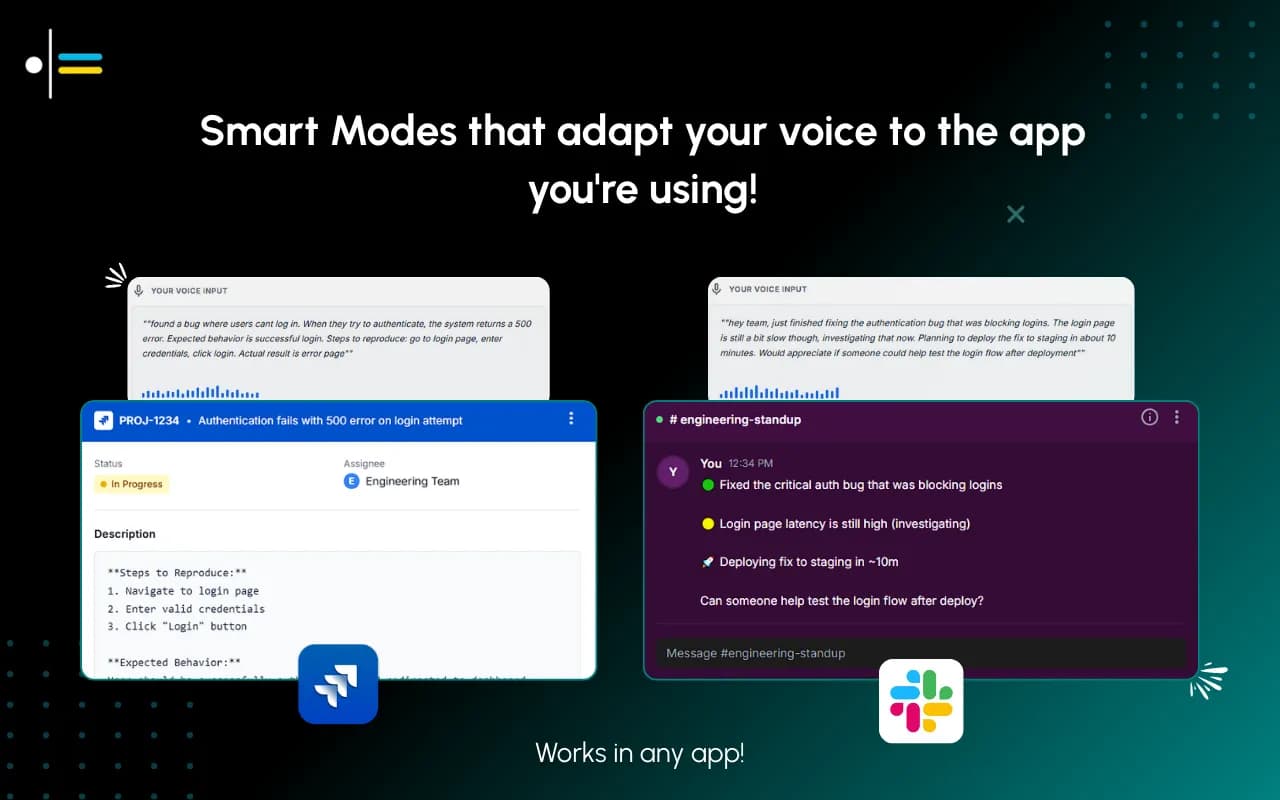
Contextli is a desktop speech-to-text app that types into the focused window at the system level. It has no home-inventory feature, no property database, and no integration with any tracker app, and it does not need one. It writes a clean entry into the app you already use to hold your log.
The part that matters for a maintenance log is customization. In Notes Mode you feed a context three or four examples of how you want an entry to look, and every dictation after that matches the shape. Give it one example like:
Date: 2026-07-23 | Item: upstairs HVAC condenser | Action: capacitor replaced | Part: TRANE CAP-45-370 | Warranty expires: 2031-07-23
and from then on you speak one plain sentence ("July 23rd, replaced the capacitor on the upstairs HVAC condenser, part number Trane cap 45 370, five year warranty") and it lands in that exact format, warranty date calculated onto its own line. You defined the structure once. You never format again.
On privacy, a home maintenance log holds more than appliance data. It carries your address, contractor names, and a service history that maps your whole property. Contextli gives you three stackable levels for that:
Stack all three and the entire flow is offline. Your repair history, address included, never leaves the laptop. If you only want speed and do not care where the audio goes, a transcription-first tool like Wispr Flow is faster for raw dictation. Contextli's edge is the formatting-by-example and the privacy stack, which is what a log full of home and contractor details actually needs.
A homeowner replaces a leaking kitchen faucet cartridge on a Saturday morning. The old way: he means to write it down, gets pulled into the next chore, and by evening cannot remember whether the replacement cartridge carries its own warranty. The entry never gets made.
With Contextli in Notes Mode, he opens his log file and speaks: "July 19th, replaced the cartridge in the kitchen faucet, Moen part 1225, lifetime warranty on the part, keep the receipt." One sentence, about 18 seconds. It types in as a dated line with the item, action, part number, and warranty flag each in place. Typing that same entry by hand, hunting the part number across the keyboard, runs closer to 80 seconds, which is exactly why it usually does not happen.
Six months on, that cartridge fails again. He opens the log, reads "Moen 1225, lifetime warranty," and files a free replacement claim in minutes. The 18-second entry saved a paid service call.
A home upkeep tracker only works if it is complete, and completeness is a habit problem, not a software problem. Log at the point of work, not later: the moment a repair finishes or a contractor packs up is the only moment you hold every fact, so dictate it before you walk away. Keeping the entry format fixed helps too, because when every line looks the same your eye scans the log fast and gaps jump out.
Then do a warranty scan once a month: sort by the warranty-expiry field and look at anything lapsing in the next 90 days. That single pass converts a pile of records into money saved, catching the failing part while it is still covered instead of a month after.

Five fields per entry: the date, the specific item, the action taken, the part or model number, and the warranty expiry date. The warranty date is the one people skip and the one that saves the most money, so store it as its own field rather than a length you have to calculate later.
No. A notes app, a spreadsheet, or a plain text file all hold the data fine. Dedicated apps add structure but lock your history inside their platform. The real bottleneck is capture speed, not format, so dictating into a file you already control tends to beat a new app you have to keep opening.
Contextli is a desktop dictation app that types a clean, formatted entry into whatever app you have open. Give Notes Mode one example of your entry format and every spoken sentence after that lands in that exact shape, warranty date on its own line. It does not store your log or replace your tracker; it makes each entry take about 20 seconds instead of 80.
It can be fully private. Contextli offers three stackable levels: run local models on your own machine with the internet off, bring your own API key so data goes straight to the provider, and disable cloud sync so nothing is stored in Contextli's database and your log stays a local file. Stack all three and your address and contractor history never leave your laptop.
Yes. You speak the number and it types verbatim into the entry. That is the point, because the model or serial is the first thing a manufacturer asks for on a warranty claim, and reading it off your log beats crawling behind the appliance with a flashlight.
Yes, with local models enabled. Transcription and text processing run on your own machine with the internet off and the app still works. This needs a reasonably modern Mac or Windows laptop; older machines run it more slowly. It is the honest trade-off for a fully offline, fully private log.
The free tier includes 100 credits per month, no credit card required. That is enough to test whether dictating your maintenance entries actually sticks as a habit.
The workflow is identical, only the items change. A car maintenance checklist app tracks oil changes by mileage; a home maintenance log tracks appliances and systems by date and warranty. If you keep one, the same voice habit covers the other.
A home maintenance log sits in the same family as other tracking habits worth keeping by voice. If you also track a vehicle, start with a car maintenance checklist app, schedule the big jobs with a car maintenance schedule by mileage, and compare the best car maintenance apps for 2026. When repair costs pile up, an expense tracker app keeps the money side straight, and for the privacy questions a log like this raises, read the dictation privacy guide for 2026. All of these live under the wider Contextli contexts library.
Next time something in the house gets fixed, log it before you walk away. Open your notes file, speak one sentence with the date, part number, and warranty, and let Contextli type it in as a clean, dated entry you can scan for lapsing coverage every month. Start on the free tier with 100 credits per month, no credit card required, and see if a 20-second entry finally keeps your log complete. Download Contextli and set up your Notes Mode format once.

Junaid Khalid
Founder & CEO
Founder and solopreneur writing about how modern businesses run leaner and faster with AI. I build software that turns everyday work, from capturing thoughts to writing and staying organized, into something effortless, and I share what I learn along the way.
A habit tracker app that survives your worst week: how to log by voice in seconds, recover broken streaks, and keep a private daily record.
Junaid Khalid
Build a gratitude journal for kids that actually sticks. A calm 3-minute nightly routine, prompts by age, and a hands-free way to capture their words.
Junaid Khalid
A goal setting app only works if you reopen it. Here is how to log goals by voice in 20 seconds so the Monday review actually happens.
Junaid Khalid