

Home Maintenance TrackerAug 4, 2026
Home Maintenance Log: Track Every Repair Before Warranty Ends
Build a home maintenance log that captures every repair, part, and warranty date by voice so nothing slips before coverage ends.
 Junaid Khalid
A fishing log app records catches, conditions, and spots so you can repeat what worked. Log it by voice at the water in seconds, not later.

You land a good fish, take a photo, and tell yourself you will write down the details later. Later never comes. Three weeks pass, you return to the same lake, and you cannot remember which bank, which depth, or what the water looked like the morning it all worked. The photo has a timestamp and nothing else. A fishing log app fixes the part of angling that memory quietly ruins: the conditions and the spot that made a session good, recorded while you still remember them.
The problem with most logs is not the app. It is the moment of entry. Your hands are wet and typing 12 fields on a phone at the water's edge is the last thing you want to do, so you skip it and the pattern disappears.
Most anglers start a log to count fish, the least useful thing it does. The value is in the conditions around the catch, because those are what you can repeat. A catch log template that earns its place records six fields per fish:
Miss the conditions and you have a scrapbook. Keep them and, after a season, you can see that the smallmouth turned on at a certain water temperature under an overcast sky, and that the flashy lure that felt lucky only produced in stained water. That is the difference between a fishing journal app and a photo roll.
Every angler has kept a log for two weekends and abandoned it. Entry happens at the worst possible moment: your hands are wet, the screen is washed out in direct sun, and the form wants you to tap through dropdowns for species, weather, a depth slider, and a notes box. It is roughly 90 seconds of careful thumbing while a fish flops. So you promise to fill it in from the car, and by the car you have forgotten the retrieve speed and the exact spot.
Speaking the same information is faster and survives the conditions. "Two-pound largemouth, north bank by the fallen tree, about eight feet, chartreuse spinnerbait, water's murky, overcast, just after seven." That is one breath, and your hands never leave the rod. A dictation tool changes the habit because it removes the step that was killing the log.
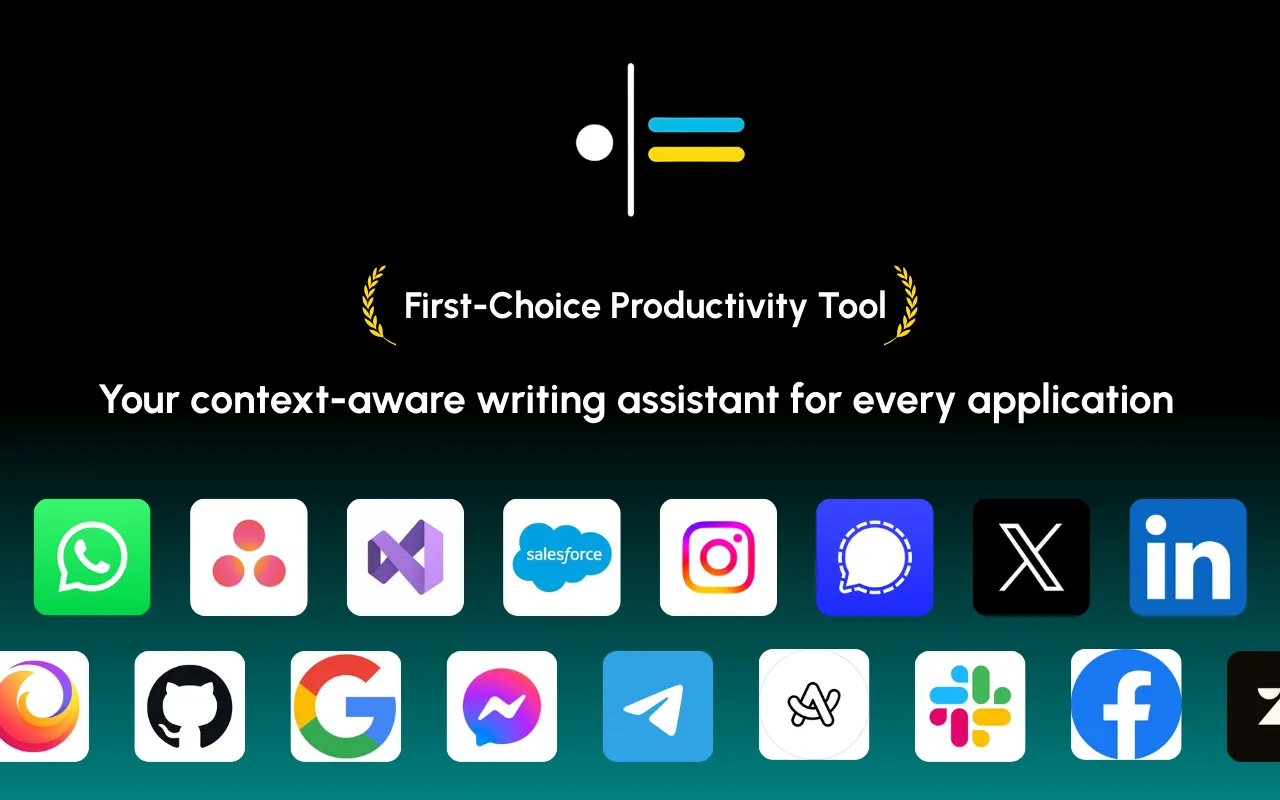
Contextli is a context-aware speech-to-text desktop app for Mac and Windows. It is not a fishing app. It is the layer that gets your spoken note into the log you already keep, whether that is a notes app, a spreadsheet, or a dedicated angler log app.
It works at the system level: it types into whatever window is focused. Put the cursor in the field, speak, and the text lands there. There is no fishing-specific integration to configure.
The part that matters for a log is Notes Mode. Raw dictation gives you a wall of "um" and run-on clauses. Notes Mode writes tight, scannable phrasing instead: short lines, consistent structure, the way you would want a catch entry to read. You feed a Mode three or four examples of how you like your entries written, and every future note matches that shape. Give it two sample entries in your own shorthand and it keeps "BR" for bass and "TW first light" for a topwater dawn session.
You are not choosing between Contextli and your fishing tracker. You use Contextli to fill it faster.
Here is how the common voice options line up for logging catches on the spot.
| Tool | On-device option | Types into any app or form | Trains on your log shorthand | Best fit for anglers |
|---|---|---|---|---|
| Contextli | Yes (local models, sync off) | Yes, system-level typing | Yes, Notes Mode by example | Structured catch entries in your own log |
| Apple/native macOS Dictation | No | Yes | No | Quick raw notes on a Mac |
| Wispr Flow | No | Yes | Limited | Fast raw transcription |
| Otter.ai | No | No, its own app | No | Recording talk, not filling a log |
| Raw Whisper | Yes, self-run | No, produces a file | No | Tinkerers building their own pipe |
Wispr Flow is faster if all you want is raw transcription dropped into a box. Contextli's edge is different: it shapes the text to match your log format and keeps the whole thing on your machine. For a catch log where structure and privacy both matter, that is the trade worth making.
A serious angler's log is a map of hard-won water: named spots, GPS pins, the exact seam where the big fish hold. That is not data you want sitting in a company's cloud, indexed and searchable.
Contextli has a stackable privacy setup. First, local models: transcription and processing run on your own machine, so you can turn the internet off and the app still works. Second, bring your own key, where your data goes straight from your machine to the provider you chose and Contextli never sees it. Third, disable cloud sync, so Contextli stores nothing in its database and your notes live as local files. Stack all three and the whole thing is offline and private.
The honest trade-off: local models want a reasonably modern Mac or Windows laptop, and an old machine runs them slowly. The dictation privacy guide covers where speech gets processed and why the location matters.
A weekend angler is working a reservoir at dawn. He lands a three-pound largemouth off a submerged point. Instead of thumbing through a form, he opens his notes app on his laptop back at the truck and speaks one line in Notes Mode: "Three-pound largemouth, south point, submerged rockpile, ten feet, green pumpkin jig slow-rolled, water clear, wind out of the west, six-forty a.m." Contextli types it as a clean, structured entry matching the format of his last 40 catches. Total time: about 15 seconds, versus roughly 90 for the form.
Three weeks later he checks the log before heading out, sees the clear-water rockpile bite has produced twice on west winds, and starts his morning there. The log earned its keep because entering it was fast enough to actually happen.
The discipline is the same whether you are logging fish, runs, or trips: what changes is whether entry is fast enough to survive real conditions. The anglers who keep a log for a full season are the ones who made recording nearly free. A few patterns that hold up:
The same voice habit carries over to other logs. The workout log app and running log for beginners guides cover the speak-it-before-you-forget approach for sets and splits, and the travel journal app guide applies it to trip details. To shape any of these to your own phrasing, customizing Contextli Modes with examples shows the by-example flow, and the context library guides cover other logs worth keeping.

A fishing log app records each catch and the conditions around it (species, size, location, depth, bait, weather, water clarity, time) so you can see patterns and repeat what worked. The best ones make entry fast enough that you record every session, not just the memorable ones.
Six fields per catch cover most of the value: species and size, location, depth and structure, presentation (bait or lure), conditions (weather, water, wind, moon or tide), and time. Conditions are the part people skip and the part that turns out most useful, because they are what you plan around next trip.
Any of them, or none. Contextli types into whatever window is focused, so it works with a dedicated angler log app, a spreadsheet, or a plain notes file. Pick the format you like and use Contextli to fill it by voice.
Yes. Contextli is a desktop dictation app that types spoken notes into whatever log or notes app you use. Speaking a two-sentence catch note takes about 15 seconds versus roughly 90 seconds to type all the fields, which is why voice entries tend to actually get recorded at the water.
No. Contextli's Modes are Email, Messaging, Notes, LinkedIn, Marketing Copy, and General Dictation. For a catch log you use Notes Mode, which writes tight structured phrasing and can be trained on your own format and shorthand by giving it three or four example entries.
They can. Contextli offers local models (transcription runs on your own machine with the internet off), bring your own key (data goes machine to provider directly, Contextli never sees it), and disable cloud sync (notes live as local files, nothing stored in Contextli's database). Stack all three and your spot list never leaves your laptop.
The free tier gives you 100 credits/month on the free tier, no credit card required. That is enough to test whether voice entry changes your logging habit across a few trips.
Stop losing the conditions that made a session good. Contextli types your spoken catch notes straight into the log you already keep, in a format you train once, and keeps your spots on your own machine. Download Contextli and record your next catch in about 15 seconds.

Junaid Khalid
Founder & CEO
Founder and solopreneur writing about how modern businesses run leaner and faster with AI. I build software that turns everyday work, from capturing thoughts to writing and staying organized, into something effortless, and I share what I learn along the way.
Build a home maintenance log that captures every repair, part, and warranty date by voice so nothing slips before coverage ends.
Junaid KhalidA habit tracker app that survives your worst week: how to log by voice in seconds, recover broken streaks, and keep a private daily record.
Junaid Khalid
Build a gratitude journal for kids that actually sticks. A calm 3-minute nightly routine, prompts by age, and a hands-free way to capture their words.
Junaid Khalid