The monthly investor update is the one piece of writing most founders skip when things get busy, which is exactly when it matters most. You tell yourself you will send it once the metrics look better, and three months pass. By then the note feels like an apology, so you delay again. Investors read that silence as a warning sign, and the warm intro or bridge check you might have needed later gets harder to ask for.
The problem is rarely that you have nothing to say. It is that a blank page at 11pm turns a 15-minute recap into a 60-minute chore. A fixed template removes the staring, and dictating the note removes most of the typing.
Key takeaways
- A monthly investor update should follow the same 6 sections every time so writing it becomes recall, not composition.
- Send it on a fixed cadence (monthly is standard for early-stage, quarterly for later rounds); consistency builds more trust than any single metric.
- Lead with the ask and the lowlights, not the highlights: investors help faster when they know exactly where you are stuck.
- You can dictate the whole update with Contextli's Email Mode and finish a first draft in about 8 minutes instead of an hour.
- With a customized Mode fed 3 to 4 examples of your past updates, every note matches your voice and sign-off automatically.
What a monthly investor update actually needs
An investor update is not a pitch and not a board deck. It is a short, honest status note that lets people who backed you stay useful between formal check-ins. Most strong updates run 400 to 700 words and take under 4 minutes to read.
The structure that works across most early-stage companies has 6 parts:
- A one-line TL;DR of the month (up or down, and why).
- Key metrics versus last month (revenue, active users, runway, whatever your north star is).
- Wins: 2 to 4 concrete things that moved.
- Lowlights: what went wrong or slower than planned, stated plainly.
- Asks: specific help you need (intros, hires, advice), with names or profiles where you can.
- A short thank-you and your next update date.
The asks section is the one founders cut first and should cut last. An investor who reads "we are trying to hire a senior backend engineer in Berlin" can forward a candidate that week. A vague "always looking for great people" gets nothing.
The investor update template you can reuse
Here is a fill-in-the-blanks version you can paste into your notes app and reuse every month. Keep the headers; swap the content.
Subject: [Company] Investor Update, [Month Year]
TL;DR: [One sentence. Good month or hard month, and the single reason.]
Metrics
- Revenue (MRR): [figure] ([+/- %] vs last month)
- Active users / customers: [figure] ([+/- %])
- Runway: [X months] at current burn of [figure]/month
- North-star metric: [your one number]
Wins
- [Concrete win with a number attached]
- [Concrete win]
Lowlights
- [What slipped, and what you are doing about it]
Asks
- [Specific intro, hire, or decision you want input on]
Thanks for the continued support. Next update: [date].
[Your name]
The value is in never re-deciding the shape. You open the same skeleton, fill six boxes, and send. That is the difference between a note that goes out on the 3rd of every month and one that never ships.
Cadence beats polish
Investors are pattern matchers. A slightly rough update that lands on schedule every month reads as a founder in control. A beautifully formatted update that appears twice a year reads as someone who only surfaces when they need money.
Pick a cadence and hold it: monthly for pre-seed and seed, monthly or quarterly for Series A onward. Put a recurring calendar block on the first business day of the month. The note does not need to be long. It needs to be predictable.
One more rule that saves relationships: send the hard updates too. The month you miss target or lose a big customer is the month to write, not skip. Founders who only report good news train their cap table to distrust the quiet months.
Where the writing time actually goes
The real cost of the monthly update is not thinking, it is turning your thoughts into typed prose that sounds composed. You know your numbers. Getting them into clean sentences with the right tone is what eats the hour.
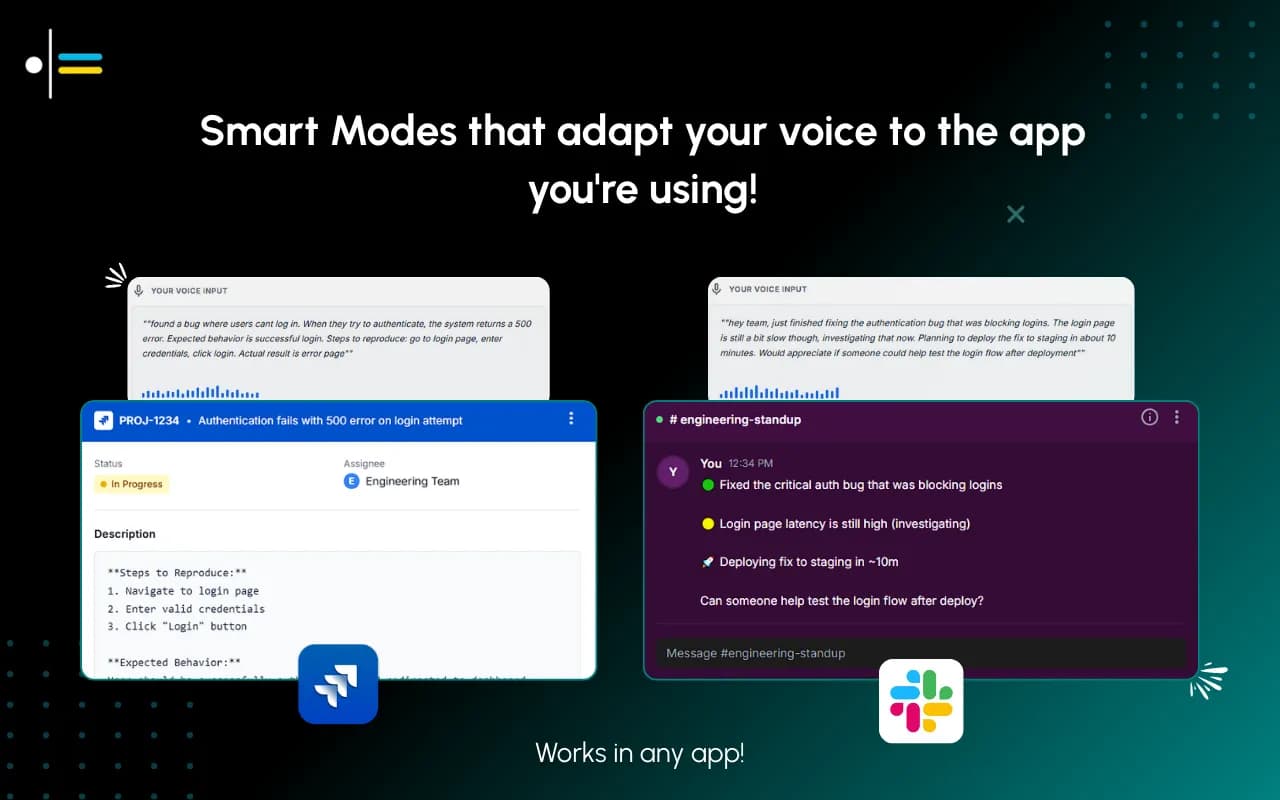
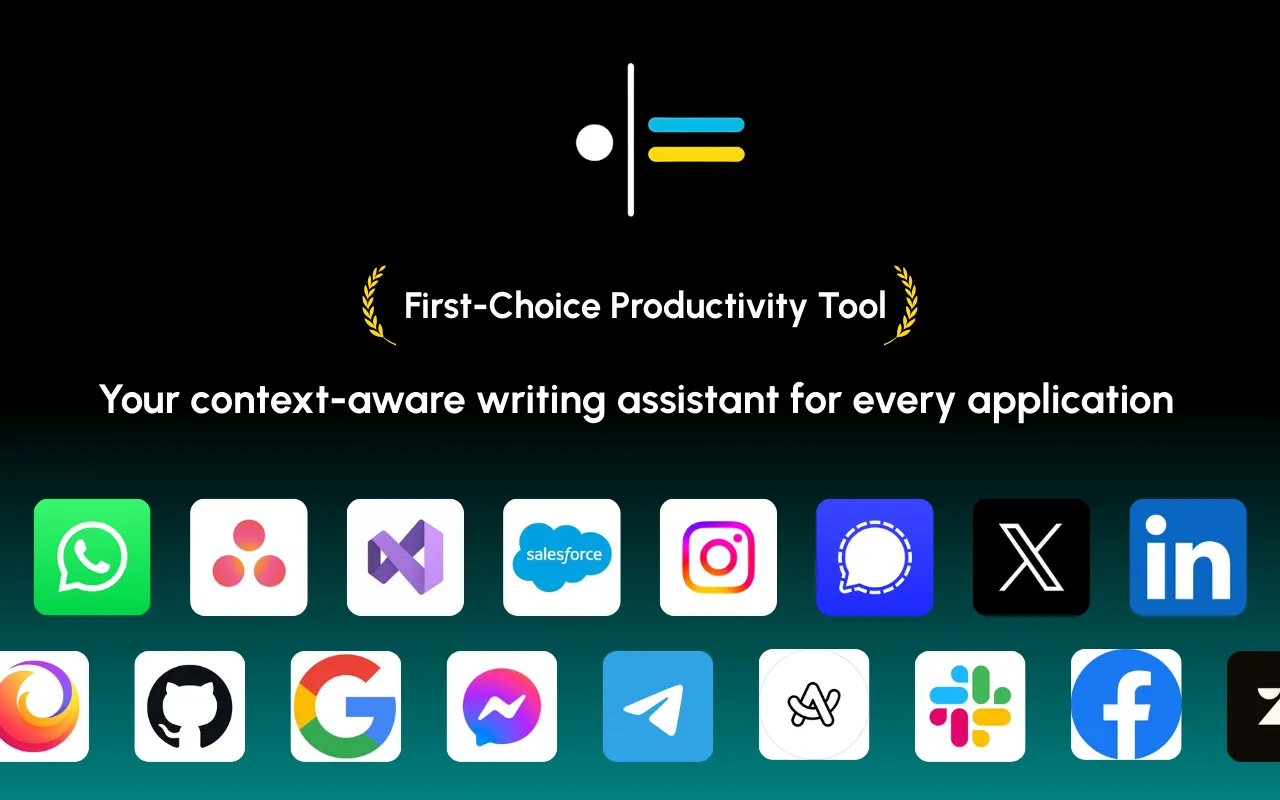
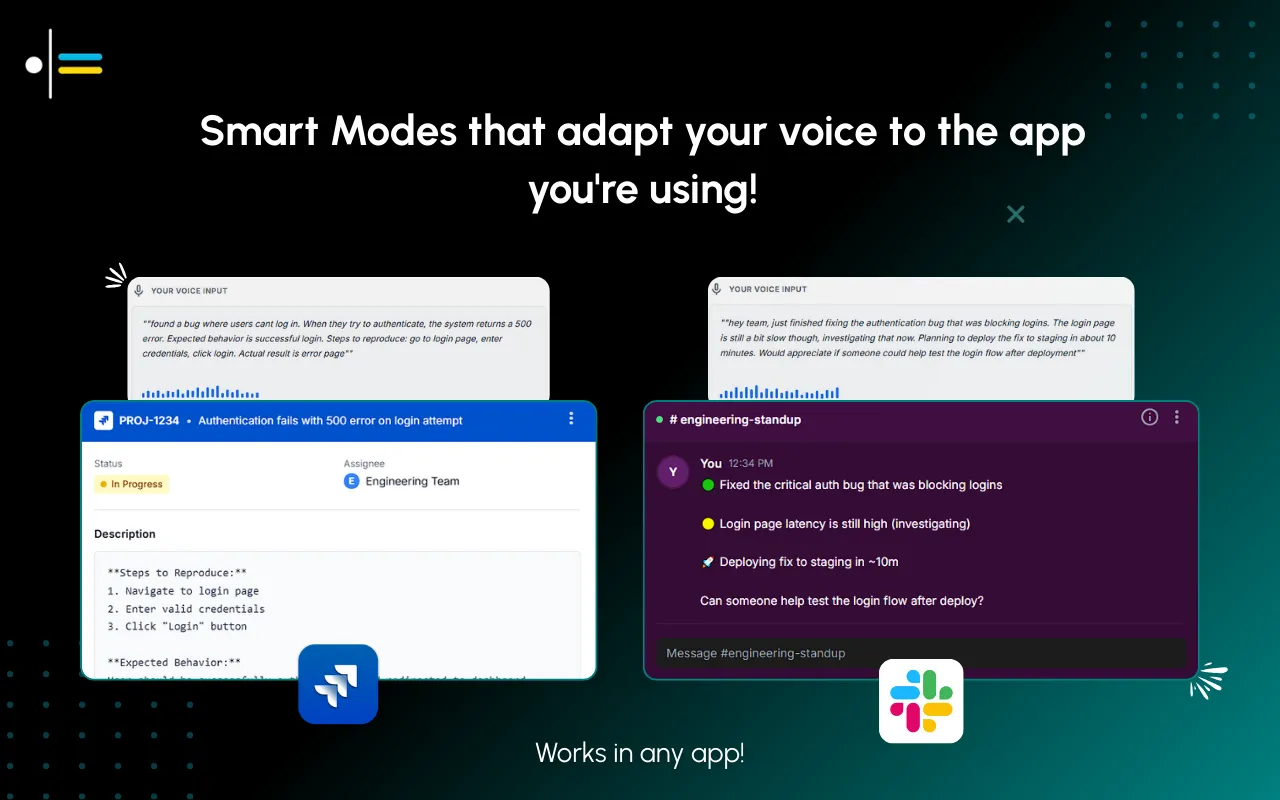
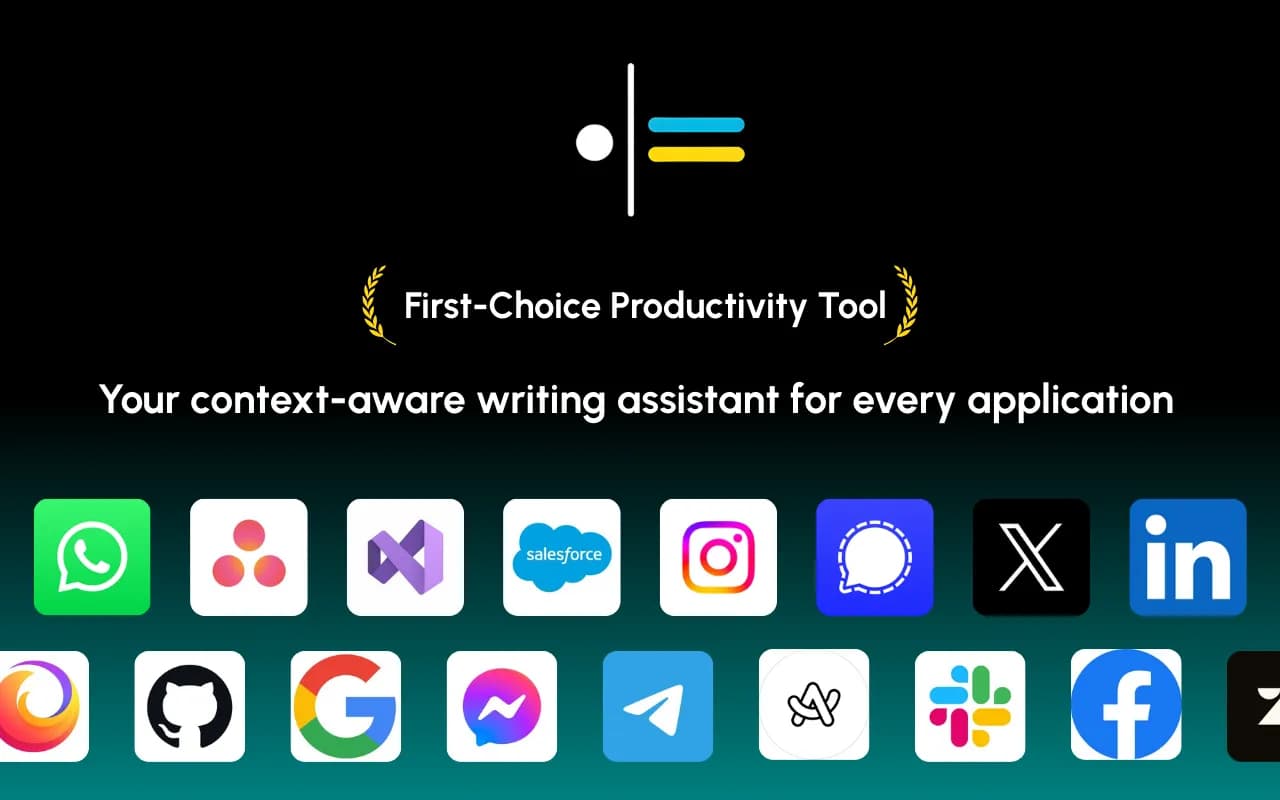
This is where dictation changes the math, but only the context-aware kind. Contextli is a desktop speech-to-text app that types straight into whatever window has focus, including your email client or notes app, with no copy-paste step. It has an Email Mode built for exactly this register: professional, complete sentences, proper structure, not the run-on stream you get from raw transcription.
The part that matters for a recurring note is customization. You feed a Mode 3 to 4 examples of how you actually write your updates (your usual tone, your sign-off, whether you say "the team" or "we"), and every future dictation matches that voice. Tell it to sign off as your first name only, or to keep UK spellings, and it holds that instruction. Your March update sounds like your February update, without you re-editing the tone each time.
Contextli competes on appropriateness, not raw speed. If all you want is a fast transcript dumped into a doc, Wispr Flow is faster. If you want a note that comes out already shaped like an investor update, in your voice, the context-aware approach saves the editing pass that usually follows dictation.
How the privacy side works for sensitive numbers
Investor updates contain your rawest figures: exact revenue, real runway, the customer you are about to lose. That is not data you want sitting on an unknown server.
Contextli gives you three stackable privacy levels. First, local models: transcription and the AI processing run on your own machine with the internet off, and the app still works (the honest trade-off is you need a reasonably modern Mac or Windows laptop; older machines run it slowly). Second, bring your own key (BYOK): you supply your own provider API key, your text goes from your machine straight to that provider, and Contextli never sees your audio or text. Third, disable cloud sync: turn it off and Contextli stores nothing in its database, so your notes live only as local files on your disk.
Stack all three and the whole workflow is fully offline and fully private. For a founder dictating exact burn and revenue, that is the difference between a convenience and a real risk.
Comparison: drafting your monthly update
| Approach |
Time to first draft |
Matches your voice |
Handles exact financials privately |
| Typing from a blank page |
~45 to 60 min |
Yes, but slow |
Yes, but manual |
| Raw dictation (Apple Dictation, raw Whisper) |
~5 min transcript, then ~30 min cleanup |
No, needs full rewrite |
Apple Dictation sends audio to servers by default |
| Wispr Flow |
~5 min, fast transcript |
Partial, general cleanup |
Cloud processing |
| Contextli, Email Mode + custom examples |
~8 min including light edit |
Yes, learned from your samples |
Yes, with local models or BYOK plus sync off |
The numbers assume a 500-word update. Your mileage moves with typing speed, but the pattern holds: the slow part is shaping and cleaning, and a context-aware Mode removes most of it.
A founder's monthly update, start to finish
Maria runs a 9-person SaaS company and dreads the update because typing it clean takes her the better part of an hour. This month she opens her draft in her email client, turns on Contextli's Email Mode, and talks through the six sections from her notes: the TL;DR, the metrics off her dashboard, two wins, one lowlight about a delayed hire, and one ask for a Berlin backend engineer intro. She speaks for about 5 minutes.
Because she fed the Mode four of her past updates, the output already signs off as "Maria" and keeps her plain, no-jargon tone. She reads it once, fixes one number, and sends. Total time: about 8 minutes, down from the hour she used to lose. The note goes out on the 3rd, same as always, and two days later a partner forwards her a candidate.
For the running record between updates, she keeps her raw monthly notes in a running doc dictated the same way, so the six sections are half-written before she ever opens the email.

FAQ
How long should a monthly investor update be?
Aim for 400 to 700 words, readable in under 4 minutes. Investors skim, so a tight update with clear metrics and one specific ask outperforms a long one. If a section has nothing new, write one line and move on.
How often should I send investor updates?
Monthly is the standard for pre-seed and seed companies. Series A and later can move to quarterly if that matches board cadence. The exact interval matters less than never breaking it: a fixed date builds more trust than the metrics inside any single note.
What should I include when the month went badly?
Send it anyway, and lead with the lowlight and what you are doing about it. Investors expect hard months; they lose confidence in founders who only appear with good news. State the problem plainly, give your plan, and make a specific ask if you need help.
Can I dictate my investor update instead of typing it?
Yes. Contextli's Email Mode is built for this register and types directly into your email client. You talk through the six sections and get back structured, complete sentences rather than a raw transcript, so a 500-word note takes roughly 8 minutes including a light edit.
Will dictated updates sound like a transcript?
Not if you customize the Mode. Feed it 3 to 4 examples of your past updates and it matches your tone and sign-off, so the output reads like something you wrote, not a voice memo transcribed word for word.
Is it safe to dictate exact revenue and runway figures?
With Contextli you can run local models with the internet off, use your own API key so the app never sees your text, and disable cloud sync so nothing is stored in its database. Stack all three and the whole update is drafted fully offline on your own machine.
Do I need integrations with my email or CRM to use this?
No. Contextli is a system-level app that types into whatever window has focus, so it works in your email client, notes app, or any editor without a plugin or API connection.
For the broader founder workflow, start with voice-to-text for founders and how to reply to investor emails fast. When you set up your update Mode, follow the walkthrough on customizing Contextli Modes with your own examples, and see Email Mode for client emails for the register it produces.
Keep your running monthly notes in a reusable structure with the meeting notes template, and if exact financials make you cautious, read the dictation privacy guide. This piece sits in the Contextli Contexts library, our hub of reusable writing setups.
Draft your next investor update by voice
Set up an Email Mode with a few of your past updates, then talk through the six sections and send a note that already sounds like you. Download Contextli and draft your next monthly update in about 8 minutes. You get 100 credits/month on the free tier, no credit card required.



 Junaid Khalid